History of Sport Horse Breeding in Kazakhstan
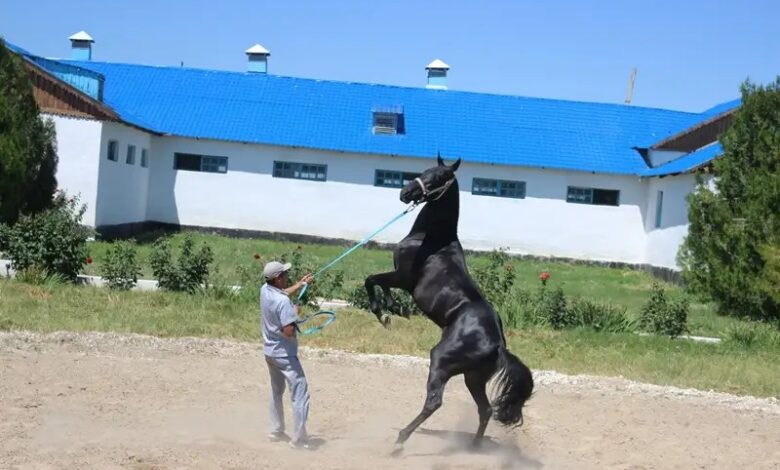
The history of sport horse breeding in Kazakhstan did not take shape overnight.
It developed through generations of horses, the work of trainers and breeders, and the efforts of stud farms that not only created exceptional bloodlines but also preserved them during periods when the entire industry was at risk of disappearing.
One of the key centers of this history was the Lugovoy Stud Farm, founded in the first half of the 20th century. For decades, it served as the main breeding base of the region and played an exceptional role in the formation of Kazakhstan’s sport horse direction.
It was here, in 1952, that the stallion Absinthe was born — a horse whose name entered the global history of dressage and became a symbol of Kazakhstan’s sport horse heritage.
At its height, the Lugovoy Stud Farm united several breeding directions at once, and the combination of Don, Karabair, and Thoroughbred blood produced the characteristic softness of movement, elasticity, and expressive gaits.
Experts from across the Soviet Union came to observe the young horses renowned for their exceptional trainability.
It was at this stud farm that the foundation was laid for the legendary line later continued by Ayu-Dag, Agdam, Agat, Akmen, and other outstanding stallions.
Thanks to the Lugovoy Stud Farm, Kazakhstan has preserved a unique genetic heritage and earned the right to speak of its own sport horse lineage, a lineage that continues to live on in modern horses and riders, maintaining the country’s equestrian traditions and sporting culture.